A Fast, Fulfilling Path Into Healthcare
If you're exploring a healthcare career, practical nursing offers a fast, fulfilling and accessible path. Whether you're a recent high school graduate, changing careers, or looking for a stable and meaningful profession, this career may be right for you.
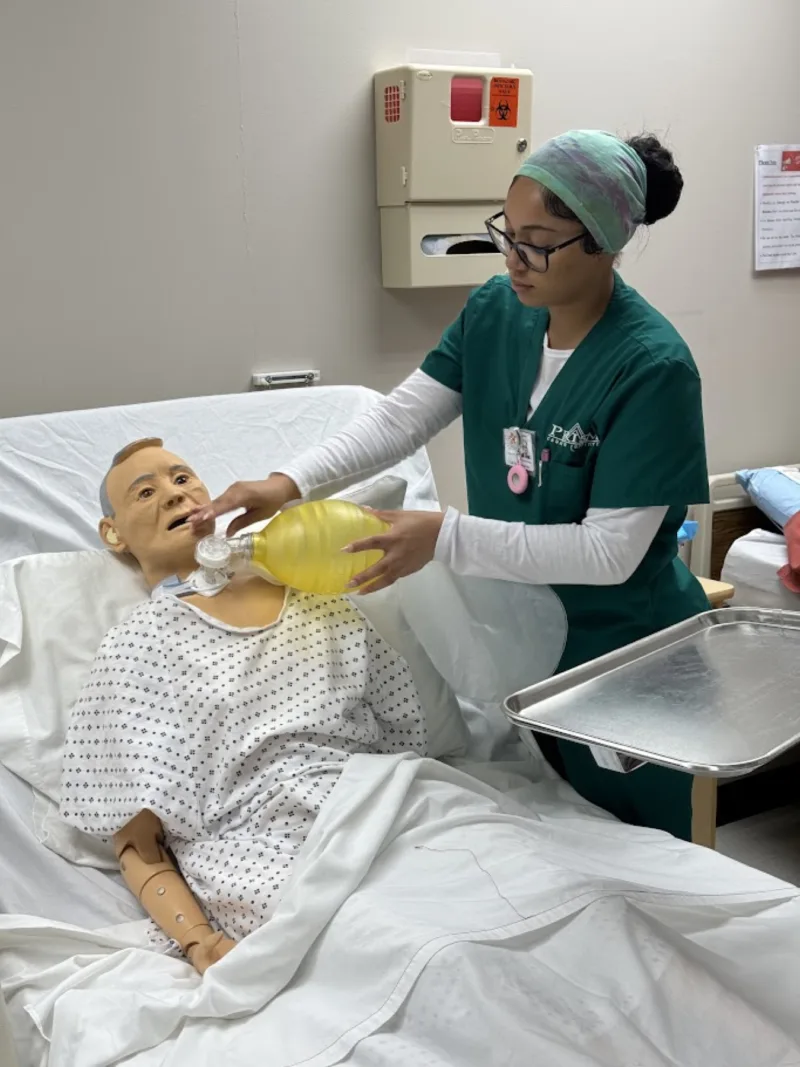
Prism Career Institute offers a Practical Nursing program at our campus in Philadelphia, Pennsylvania, where you can train in as little as 15 months with hands-on, career-focused education.
What Does a Practical Nurse Do?
Practical nurses play a hands-on role in patient care. They work under the direction of registered nurses (RNs) and physicians, alongside other healthcare professionals, and their responsibilities span clinical and administrative tasks:
- Monitoring patients: taking vital signs, asking about medical history and symptoms, watching for changes in a patient's condition and reporting them to the RN or physician.
- Basic patient care: helping patients with hygiene, mobility, feeding and comfort, changing dressings and providing bedside care.
- Giving medications: as permitted by state rules and under the direction of an RN or physician, with the right dosage, timing and documentation, and watching for side effects.
- Keeping records: documenting care, updating charts and health records, helping admit patients and relaying information to the care team.
- Teaching patients and families: answering questions with empathy and explaining conditions, medications and self-care, such as wound care after stitches or the side effects of a new prescription.
- Working with the care team: supporting doctors, RNs, therapists and other specialists, and helping coordinate each patient's care.
PNs also often collect samples for laboratory testing and prepare patients and equipment for exams or procedures. Their exact duties depend on the setting and on state rules, so a PN in a hospital, a nursing home or a rehabilitation center may have a very different day from one in a physician's office.
Why Choose a Practical Nursing Career?
Practical nursing is a vital role in healthcare, and one that offers stability, purpose and room to grow, whether you want a fast track into the medical field or a stepping stone to further education.
Job Stability
Practical nurses are needed in hospitals, long-term care facilities and home health agencies as populations grow and communities age. The U.S. Bureau of Labor Statistics projects about 51,800 openings each year from 2025 to 2035.**
A Rewarding Patient Care Role
From assisting with daily activities to monitoring vital signs and supporting recovery, practical nurses provide hands-on care that directly affects patients' health and comfort, and build meaningful connections along the way.
A Shorter Path Into the Workforce
Unlike many healthcare careers that take years of education, practical nursing programs can typically be completed in about 15 to 18 months, so you can start earning and gaining experience sooner.
A Stepping Stone to Further Education
Many professionals begin as practical nurses and later pursue advanced credentials through bridge programs, such as PN-to-RN pathways, expanding their scope of practice and earning potential.
Flexible Career Opportunities
Practical nurses work in hospitals, long-term care facilities, rehabilitation centers, schools and home healthcare, so you can choose a setting that suits your interests and lifestyle.
How to Become a Practical Nurse, Step by Step
The path to becoming a practical nurse involves a few key steps, each preparing you for success in the healthcare field.
1
Earn a High School Diploma or GED
This is the first requirement for entering any practical nursing program, and shows you have the foundational skills to succeed in healthcare training.
2
Complete an Approved Practical Nursing Program
Programs typically cover anatomy and physiology, pharmacology, nutrition, infection control, medical terminology and nursing fundamentals, plus clinical rotations where you apply your skills in real healthcare settings under supervision.
3
Pass the NCLEX-PN Examination
The National Council Licensure Examination for Practical Nurses is required for licensure in Pennsylvania. Start reviewing early, keep a consistent study schedule, and use full-length practice tests to get familiar with the format.
4
Obtain State Licensure
After passing the NCLEX-PN, apply for licensure in your state. Pennsylvania has specific requirements, so follow the correct process to make sure you're legally authorized to begin working.

Get Program Details
Request your free program guide and get everything you need to take the first step.
Career Prospects
Next Start Dates
Tuition Costs
Funding Options
Free · No obligation · Takes 30 seconds
Where Do Practical Nurses Work?
Practical nurses are essential members of the healthcare team in a wide variety of clinical and community settings:
- Hospitals: bedside care, monitoring patients, administering medications and supporting recovery in units such as medical-surgical, emergency and maternity.
- Long-term care and nursing homes: ongoing care for elderly residents or people with chronic conditions, building relationships with patients over time.
- Home healthcare: visiting patients at home for wound care, medications and health monitoring, with one-on-one care and flexible scheduling.
- Physicians' offices and clinics: routine exams, vital signs, preparing patients for procedures and updating medical records, usually with regular hours.
- Other settings: schools, rehabilitation centers and correctional facilities, supporting student health, recovery from surgery or injury, and essential care.
Is a Practical Nursing Career Right for You?
Practical nursing takes more than clinical training: it calls for technical skill, emotional intelligence and physical endurance. It could be an excellent fit if:
- You're naturally compassionate and want to make a difference in people's lives during illness and recovery.
- You communicate clearly and respectfully, whether explaining a procedure to a patient or updating a physician.
- You pay close attention to detail, from recording vital signs to administering medications.
- You have the stamina to stay on your feet through long shifts, lifting and repositioning patients.
- You're a natural problem-solver who adapts and makes sound decisions under pressure.
FAQs About Becoming a Practical Nurse
Complete a state-approved practical nursing program, pass the NCLEX-PN exam, and apply for licensure in your state. Prism Career Institute offers a Practical Nursing program in Philadelphia, PA to help you get started.
Practical Nursing ProgramAt Prism Career Institute, you must:
- Be 18 years or older
- Hold a high school diploma or equivalency certificate, and provide a copy with a high school transcript
- Complete an interview with an admissions representative and be recommended to apply
- Pass the ATI TEAS entrance exam with a score of at least 46
- Submit and pass a criminal background review, a drug screen test and a child abuse clearance
Most practical nursing programs take around 15 to 18 months of full-time study. Prism Career Institute's Practical Nursing program can be completed in as little as 15 months*, with day or evening/weekend schedules.
*Program length when completed in normal time.
Get Program DetailsStart Your Practical Nursing Journey
With hands-on training, experienced instructors and supportive Career Services, our Practical Nursing program is designed to prepare you for success in the field. Review the admission requirements, contact us to learn more, or apply online today.
Is Training With Prism Career Institute Right for You?
Take the Prism Career Training Readiness QuizThis fun, online quiz takes 3 minutes to complete and you’ll get a personalized report. Identify your strengths and social style and see how ready you are for career training.